
Eritrea Accused of Genocide Against Red Sea Afar
Eritrean Government Accused of Genocide and Systematic Human Rights Violations Against Red Sea Afar
Ethiomonitor -Addis Ababa
December 24, 2025
Eritrean opposition group, the Democratic Organization of the Eritrean Red Sea Afar, has accused Eritrean government of committing genocide and systematic human rights violations against Afar people in the Red Sea region, particularly in the (Danakil) area, since 1993.
In a press statement issued on Wednesday, the organization said Afar population has been subjected for more than three decades to what it described as state-sponsored, widespread, and systematic abuses, affecting all aspects of political, economic, social, and cultural life.
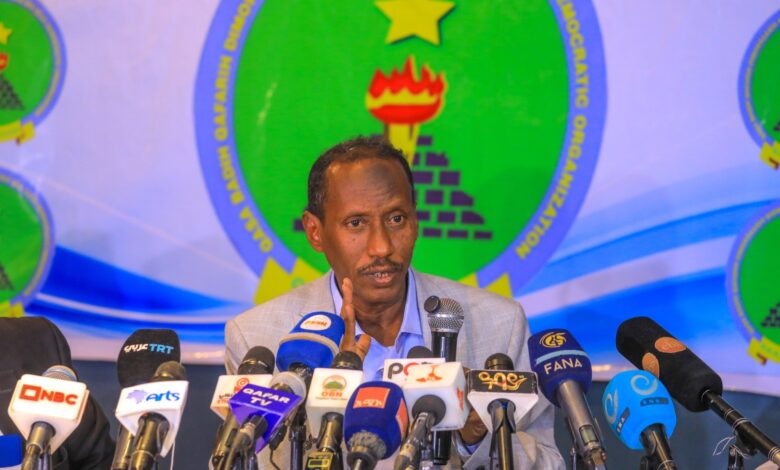
Speaking at a press conference in Addis Ababa, attended by local and international media, the organization’s chairman, Ibrahim Harun, said that, “Eritrean authorities have carried out extrajudicial and arbitrary killings, ethnic cleansing, ethnically motivated massacres, arbitrary arrests, torture in official and secret detention facilities, and enforced disappearances involving thousands of politicians, community elders, religious leaders, and youth.”
He further accused the government of imposing forced military conscription, conducting the forced displacement of more than 300,000 Afar people from their ancestral lands, and systematically using sexual violence and rape as tools of repression.
Harun warned that these violations are escalating daily and pose an existential threat to the Afar people along the Red Sea coast.
The organization also accused the Eritrean government of attempting to erase Afar identity through policies that include banning education in the Afar language, closing mosques, prohibiting the teaching of the Quran, and targeting religious and social leaders.
According to Harun, these measures are intended to dismantle the cultural and religious fabric of the Afar community.
In addition, the group said the Afar people’s economic rights have been severely violated through bans on fishing in the Red Sea, restrictions on employment and access to natural resources, exclusion from development projects, and forced displacement linked to resource exploitation initiatives.
These policies, it said, have destroyed livelihoods and threatened the survival of the Afar community.
The DORSA confirmed that it has taken formal legal steps to hold the Eritrean government accountable. These include submitting a complaint and legal case to the African Commission on Human and Peoples’ Rights on June 4, accompanied by a 122-page detailed report containing evidence, victim testimonies, reports from international human rights organizations, and United Nations documentation.
The case was officially registered by the Commission on October 13.
The organization called on the United Nations, the African Union, and international human rights bodies to give urgent attention to the humanitarian situation in the Dankalia region, launch independent international investigations, and take effective legal, diplomatic, humanitarian, and political measures to pressure the Eritrean government to halt the abuses and ensure accountability.
The organization welcomed the African Commission’s response and its serious engagement with the case, reaffirming its commitment to pursuing peaceful and legal avenues until the violations are halted and justice, accountability, and the rights and dignity of the Red Sea Afar people are secured