
Fashir on the Edge: Genocide in Waiting and the Imperative of International Action

Abdelnasser Selum Hamed
Senior Researcher & Director, East Africa and Sudan Program, FOx Research
Researcher in Crisis Management & Counter-Terrorism
Ethiomonitor –Sweden – Stockholm
February 21, 2026
In recent weeks, the United States has imposed targeted sanctions on senior figures within the Rapid Support Forces (RSF), citing their responsibility for grave human rights abuses and atrocity crimes in Darfur. These measures coincided with the release of findings by the UN-mandated Independent International Fact-Finding Mission on Sudan, which concluded that acts committed in and around El-Fasher bear the hallmarks of genocide. Together, these developments signal growing international recognition that the violence unfolding in North Darfur is not a series of episodic battlefield escalations, but part of a structured campaign with potentially genocidal dimensions. Yet recognition without decisive preventive action risks becoming little more than documentation of a catastrophe in progress.
Fashir, the capital of North Darfur, lies at the center of a protracted conflict that has devastated the social and humanitarian fabric of its population for decades. Home to tens of thousands from diverse ethnic groups, the city endured an eighteen-month siege before falling in late October 2025 to the RSF.
The crisis in Fashir is no longer merely military; it has become a direct test of the absolute prohibition of genocide under international law. The report issued on February 19, 2026, by the UN-mandated Independent International Commission of Inquiry on Sudan and submitted to the Human Rights Council concluded that the documented pattern of acts bore the hallmarks of genocide. Genocidal intent, the report noted, represented “the only reasonable inference” that could be drawn from the consistency of events. While not a final judicial determination, the report shifts the matter from moral condemnation toward the realm of legal accountability.
Genocide, under the 1948 Convention on the Prevention and Punishment of the Crime of Genocide, requires intent to destroy, in whole or in part, a national, ethnical, racial, or religious group. The determining factor is the intent underlying the acts, not the number of victims. The International Criminal Tribunal for the former Yugoslavia, in the Krstić case, affirmed that such intent may be inferred from a consistent pattern of conduct when interpreting the acts as random would be unreasonable.
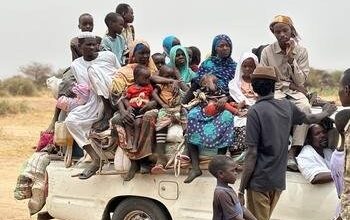
The prolonged siege preceding the city’s capture was more than a military tactic; it represented the first stage of an escalating and cumulative trajectory. Restrictions on food, medicine, and basic services weakened the social fabric and diminished the population’s capacity to flee or seek shelter. According to the UN High Commissioner for Human Rights, the final RSF offensive killed more than 6,000 people in the first three days—approximately 4,400 inside the city and 1,600 during escape attempts—while causing widespread destruction and mass displacement, marking one of the most severe waves of violence in Darfur since April 2023.
Under international humanitarian law, the starvation of civilians or the denial of humanitarian relief may constitute a war crime. Yet the Genocide Convention recognizes that deliberately inflicting conditions of life calculated to bring about a group’s destruction constitutes a genocidal act when combined with specific intent. Systematic weakening alone does not conclusively establish genocidal intent, but it creates the conditions in which subsequent acts can acquire existential significance. When collective survival is eroded, any targeted action may become fatal in effect.
The report further highlights repeated targeting of non-Arab communities, particularly the Zaghawa and Fur, alongside sustained sexual violence used to undermine social cohesion and instill terror. Such conduct reflects a methodical pattern rather than isolated incidents. Continued violations in the absence of accountability undermine claims of randomness and emphasize leadership responsibility. This responsibility extends to those who knew or should have known of the crimes and failed to take reasonable preventive or punitive measures. At this stage, inaction itself becomes part of the process.
Timing is critical in prevention. Article I of the Genocide Convention establishes a positive obligation to prevent genocide, not merely to punish it after the fact. The International Court of Justice, in Bosnia and Herzegovina v. Serbia and Montenegro (2007), confirmed that the duty to prevent arises at the moment a state becomes aware, or should normally have become aware, of a serious risk of genocide—not after the crime is consummated. States that fail to employ all reasonable means within their power to prevent the crime may incur international legal responsibility.
Genocide often unfolds incrementally, enabling repeated acts to occur without immediate deterrence. Waiting for conclusive judicial confirmation before taking action transforms the prohibition from a preventive norm into a post-factum response. Its value lies in the capacity to disrupt the trajectory before its culmination. Fashir thus serves as a measure of the strength of international law: absolute prohibitions are tested at moments of imminent danger, not after catastrophe has occurred. At the precipice, prevention is a duty, not an option, and inaction constitutes failure.
The international community bears direct responsibility. Humanitarian corridors must be established to ensure the delivery of food and medical assistance. Sanctions must move beyond symbolism, and diplomatic and legal pressure must intensify. Evidence must be preserved, and pathways toward international prosecution must be actively pursued. Commanders and fighters responsible for violations must face credible accountability.
Fashir represents a critical juncture for both Sudan and the global commitment to human rights. The unfolding crisis demonstrates that legal norms must be enforced proactively rather than reactively in order to preserve civilian life and prevent escalation into mass atrocity. Immediate humanitarian, diplomatic, and legal intervention is imperative to avert a fully realized genocide and to uphold the principle that no protected group should face annihilation without international scrutiny and action.
When Life Becomes the Battlefield: Sudan’s War Without Bullets – ETHIO MONITOR