
When Life Becomes the Battlefield: Sudan’s War Without Bullets
How War Is Waged by Destroying the Conditions of Life
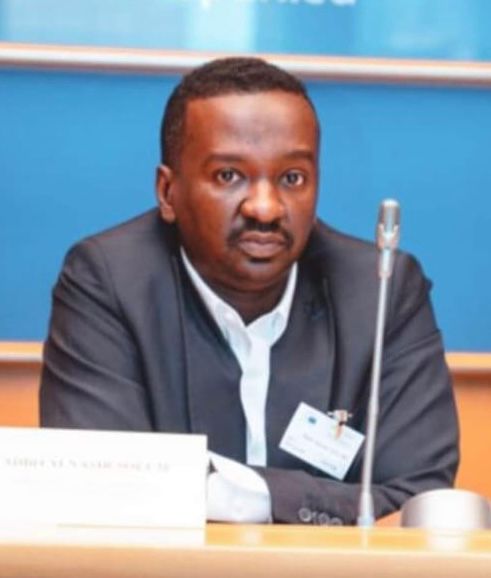
Abdelnasser Selum Hamed
Senior Researcher & Director, East Africa and Sudan Program, FOx Research
Researcher in Crisis Management & Counter-Terrorism
Ethiomonitor -Addis Ababa
December 13, 2025
War in Sudan no longer announces itself through frontlines or decisive battles. It unfolds instead through time, delay, and deprivation. Death has not disappeared from the battlefield, but it has migrated into something quieter and more enduring: a slow administrative process that dismantles life itself.
This is not a war fought primarily with gunfire. It is a war fought against predictability—against the ability of ordinary people to know whether tomorrow will contain food, medicine, safety, or return. In Darfur, Khartoum, Al Jazira, and Kordofan, violence operates less through spectacle than through management: roads closed without warning, markets frozen without decrees, supplies looted into absence, and hospitals rendered unreachable not by formal bans but by risk.
This article is not about battlefield violence. It is about how war is now fought by dismantling the everyday conditions that make life possible. Food, healthcare, mobility, and the fragile minimum of daily security have become the terrain of conflict. Control is no longer measured by territory alone, but by the ability to make life unlivable—slowly, selectively, and without attracting the scrutiny that spectacular violence provokes.
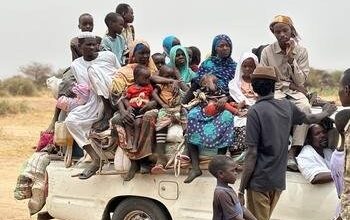
By December 2025, Sudan had become the site of the world’s largest displacement crisis. According to UN and IOM estimates, nearly 11.9 million people were forcibly displaced, including over 8.6 million internally displaced persons and more than 3.3 million refugees who fled to neighboring countries. These figures describe more than a humanitarian emergency; they reveal a structural transformation in which survival itself becomes contingent, negotiable, and increasingly governed. This is not collateral damage. It is governance exercised through deprivation.
What makes this moment particularly dangerous is not only the scale of suffering, but the growing international normalization of slow violence. As the war drags on, deprivation is increasingly treated as background noise rather than as a deliberate strategy. Shortages are framed as inevitable. Delays become routine. Civilian exhaustion is absorbed into the language of “complex emergencies.”
Sudan is not an exception. It is an extreme case of a broader global shift toward managing war through deprivation rather than direct confrontation. This form of warfare minimizes political cost while maximizing civilian exhaustion. It produces fewer images that demand outrage, fewer moments that force urgent response. Instead, it stretches suffering across weeks, months, and years—until catastrophe is reclassified as a chronic condition.
On an ordinary day under this war, a civilian does not carry a rifle or flee an airstrike. He carries a short list: bread, medicine, water. He returns home missing two of the three. He was not officially banned, not formally charged, and no shot was fired at him. Yet he learns, day after day, that tomorrow will cost more than today—and that staying home is not safety.
Weeks later, the same civilian no longer plans his day. He plans his risk.
In war psychology, the ability to anticipate tomorrow is a cornerstone of mental stability. When that capacity collapses, people do not break all at once. Anxiety becomes chronic. Waiting turns into exhaustion. Time itself becomes a threat. This is not the trauma of a single event, but the trauma of atmosphere—a permanent climate of uncertainty that drains the body and mind long before hunger or illness completes the work.
Here, time becomes a weapon. Survival is not denied outright; it is postponed, rationed, and priced.
Since April 15, 2023, civilian harm has expanded dramatically. Yet the most consequential transformation lies not only in scale, but in how control is exercised. In conventional wars, control is measured by territory. In Sudan, territory alone often means little. The fate of entire communities is determined by who controls roads, fuel, supply chains, warehouses, and the authority to freeze—or selectively reopen—markets.
In this war, survival is not denied outright. It is postponed, rationed, and priced. Services become instruments of war. Scarcity becomes a mechanism of governance.
Political sociology teaches that there is a moment in war when the meaning of the state itself changes. When a state can no longer perform its most basic function—protecting everyday life—an undeclared parallel authority emerges. It may not issue constitutions, but it issues permissions. It may not pass laws, but it controls passage. Checkpoints, travel approvals, fuel access, and warehouse keys become the true levers of power.
Life is no longer organized by rights, but by access; not by citizenship, but by mediation. Legitimacy no longer flows from law or consent, but from the ability to regulate scarcity. This is the sovereignty of scarcity: power measured by the ability to grant life, delay it, or price it out of reach.
Food insecurity has reached structural levels. At the height of the crisis in September 2025, an estimated 21.2 million people—around 45 percent of Sudan’s population—were facing acute food insecurity, including more than 750,000 people classified under IPC Phase 5 (catastrophic conditions). At this scale, hunger ceases to be an individual condition and becomes a governing reality.
Repeated failed attempts to cope—searching for food and returning empty-handed, waiting for corridors that never open, relying on aid that arrives too late—produce what psychologists describe as learned helplessness. People stop trying not because they no longer want to live, but because experience teaches them that effort no longer alters outcomes. Defeat moves inward, from front lines into homes, memories, and the self.
Persistent fear does not kill instantly. It dismantles the capacity to act—and turns survival into a daily burden.
Funding shocks intensify this indirect violence. When food assistance is reduced or delayed, scarcity becomes a force multiplier. The impact is not only physical but symbolic. When communities conclude that the world cannot—or will not—deliver even the minimum, abandonment becomes internalized. In this war, abandonment is not incidental. It is part of the mechanism.
Sudan’s healthcare system has been systematically hollowed out. By late 2025, more than 70 percent of health facilities in conflict-affected areas were partially or completely non-functional, due to looting, insecurity, lack of staff, and shortages of fuel and medical supplies. For millions, access to care has become a matter of luck, mediation, or money.
Darfur illustrates these dynamics with brutal clarity. Displacement is not merely the loss of shelter, but the loss of an entire map of life: livelihoods, schools, neighbors, routines, and collective memory. As populations concentrate in resource-poor areas, pressure on water, healthcare, and food intensifies, creating conditions ripe for disease, exploitation, and despair.
Children bear a disproportionate share of this collapse. An estimated 19 million children are currently out of school, while over 14 million children require humanitarian assistance, many facing malnutrition, trauma, and the long-term consequences of prolonged instability. A child raised in an environment where food, safety, and the ability to return home are never guaranteed does not experience temporary fear—fear becomes formative.
A society shaped by such conditions loses its capacity to adapt. Trust erodes. Silence becomes the least costly option. Even humanitarian acts come to be perceived as risks. A society without trust is a society without the capacity to resist—or to recover.
This analysis does not attribute responsibility to any single military institution, but examines how prolonged war reshapes power through deprivation.
Under international humanitarian law, the systematic deprivation of objects indispensable to civilian survival is not neutral conduct. When civilian movement is constrained in ways that foreseeably lead to starvation, denial of healthcare, or the collapse of basic services—and when such practices follow recognizable patterns over time—death cannot be treated as incidental. Depending on scale, pattern, and intent, such conduct may amount to war crimes or crimes against humanity.
The danger of this kind of war is not only that it kills slowly, but that it teaches the world to accept slow death as normal. When suffering becomes routine, accountability becomes optional. And when accountability becomes optional, violence no longer needs to justify itself.
Killing without bullets is not a metaphor. It is a description of a war waged against life itself. And wars waged against life do not end when guns fall silent. They end only when life itself becomes protected again.
History will judge not only those who commit direct violence, but also those who accept slow death as normal—and those who learn to treat silent suffering as background noise. In that silence, it is not only people who are exhausted, but the very idea of a human being protected by law, dignity, and conscience.